Behind the Label
When the Needle Learnt to Sing - A Tale by Maatir Maanush
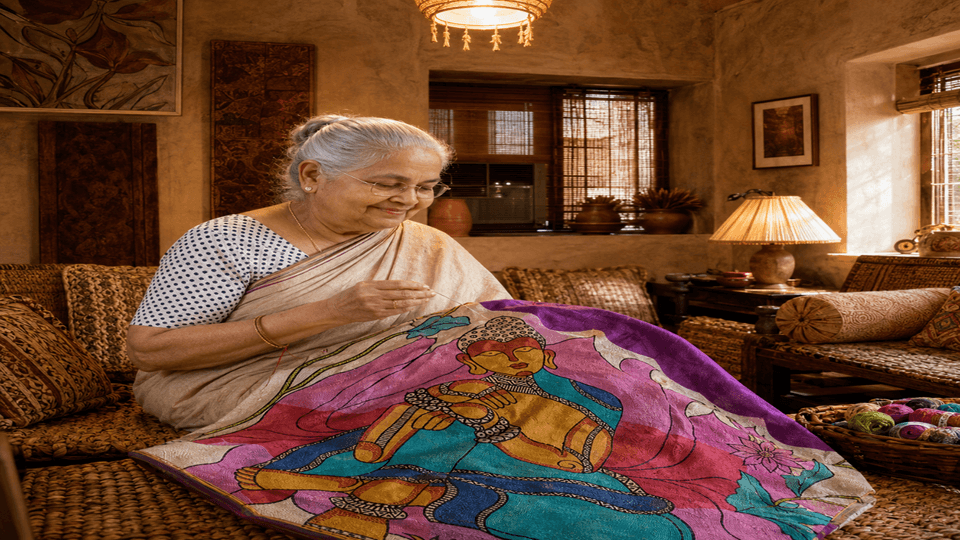
Some families inherit homes. Others inherit jewellery wrapped in velvet, silver polished for festivals, or recipes whispered from one generation to the next. Yet there are quieter inheritances that rarely find a place in family records. They pass from hand to hand without announcement, carried in the rhythm of work, the patience of repetition, and the warmth of afternoons that seem ordinary until they become memories. In a small Bengali “baithakkhana” where sunlight drifted through old wooden windows, a little girl sat beside her grandmother. There was no lesson planned for the day. No blackboard. No notebook. Only a length of silk spread gently across tired knees, a needle catching the light, and thread that seemed to know its own way home.
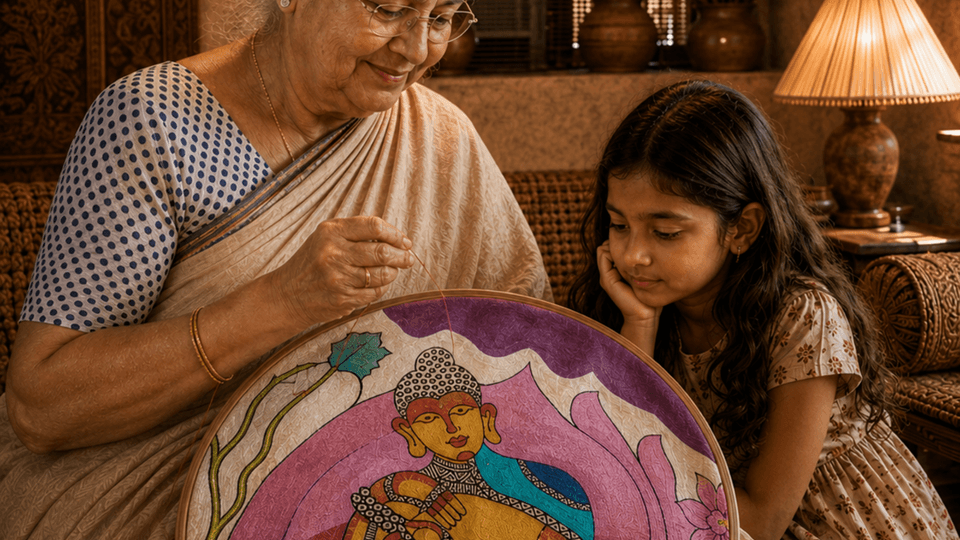
“Dida,” the child finally asked, “why do you keep making the same little stitch?” The old woman smiled without looking up. “Because I am not stitching cloth,” she said softly. “I am stitching time.” The child watched in silence. Every tiny running stitch appeared almost identical to the last, yet together they slowly awakened flowers, birds, stories and forgotten songs. What looked like embroidery from a distance was, up close, an act of extraordinary devotion. The fabric was not simply becoming beautiful—it was becoming unforgettable.
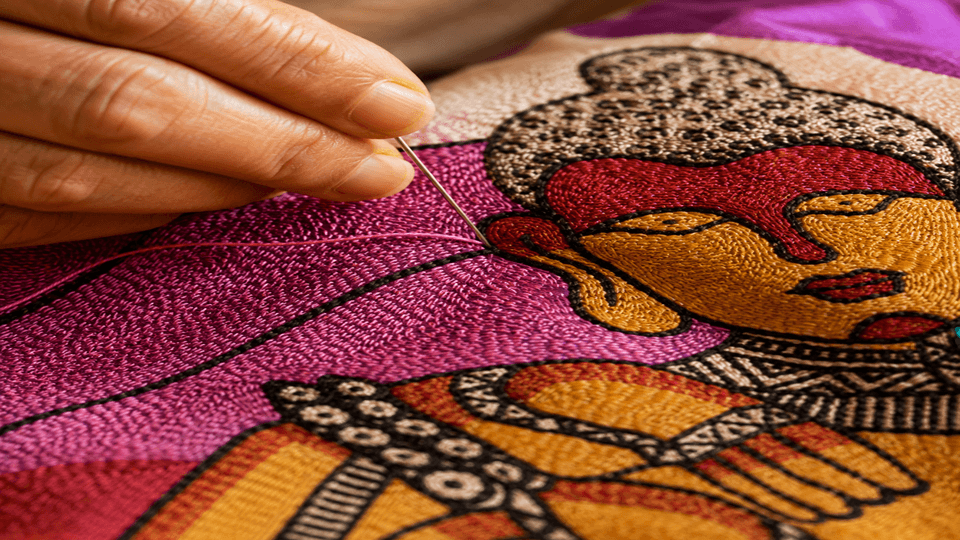
Long before the world celebrated slow fashion or spoke of artisan luxury, women across Bengal understood that the finest things could never be hurried. They embroidered while waiting for rice to simmer, while listening for children returning home, while the monsoon tapped patiently on tiled roofs. Kantha was never made to impress strangers. It was made to hold love in a form that time could touch.
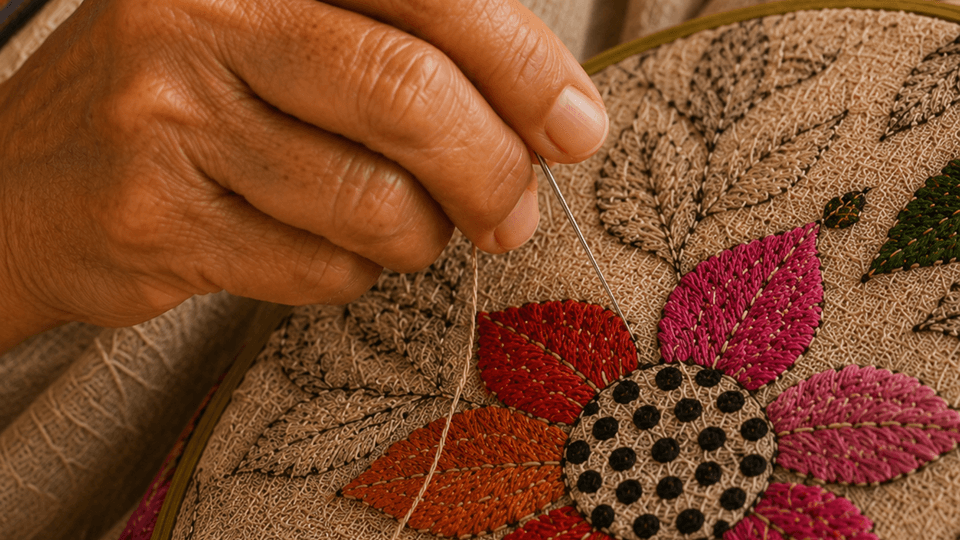
At Maatir Maanush, we believe every contemporary Kantha saree, jacket and silhouette begins with that same quiet promise. We do not preserve Kantha by locking it inside yesterday. We honour it by allowing it to travel forward—stitched into modern heirlooms that still carry the heartbeat of the hands that created them. Perhaps that is what true inheritance has always been. Not something we own but something that we cherish as a family heirloom.